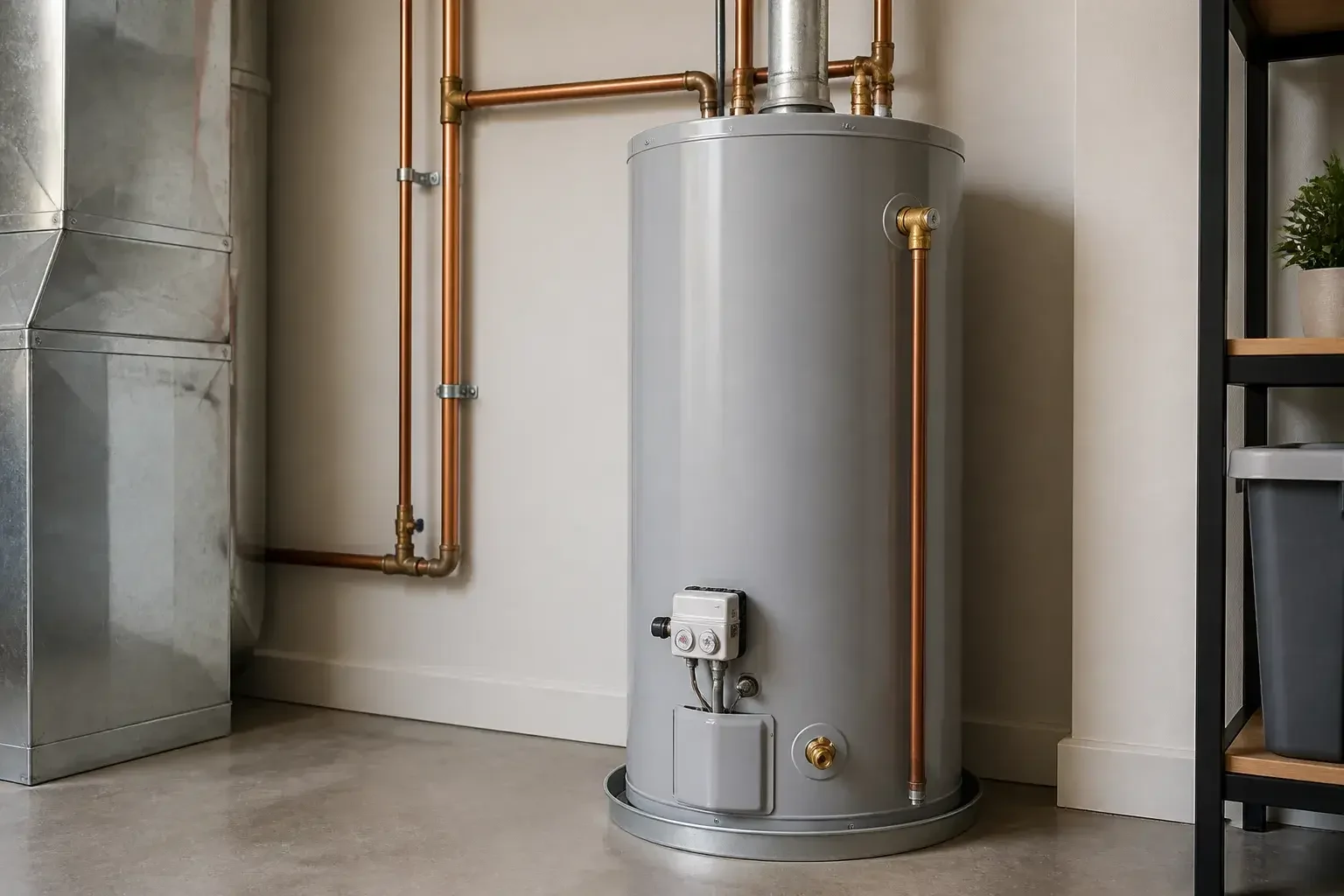
Water Heaters in Boise, ID
Hot water problems are diagnosed and handled before daily routines get thrown off.
When your shower turns cold halfway through, the dishwasher leaves dishes greasy, or the water heater starts popping and rumbling, the problem rarely fixes itself. A failing unit can show up as lukewarm water, discolored water, puddles around the tank, or hot water that runs out much faster than it used to. If you are seeing one or more of those signs, the next step is to have a plumber look at the system before a small issue turns into a bigger one.
Ridgeline Plumbing helps homeowners in Boise with water heater repair, replacement, and related plumbing work. We are a local plumbing company serving the Treasure Valley since 2009, and we keep the process straightforward: clear communication, straight pricing, and clean work in your home. If your water heater is acting up, we can help you figure out what is going on and what makes sense next.
Warning signs
A water heater usually gives a few hints before it stops doing its job. Some of those signs are easy to ignore at first because the unit still produces some hot water. The problem is that a weakening tank or failing internal part often keeps getting worse until the water turns unreliable.
Common signs include:
- Water runs out too fast: The tank may not be heating properly or may not be holding enough usable hot water.
- Temperature swings: Water that goes from hot to lukewarm without warning often points to a failing component or sediment buildup.
- Odd noises: Popping, rumbling, or crackling sounds can happen when sediment collects inside the tank and interferes with heating.
- Rusty water: Brown or reddish water may signal corrosion inside the tank or in connected piping.
- Moisture near the base: Small leaks can start as dampness, then become a bigger leak that damages the floor around the unit.
- Slow recovery: If you wait a long time for hot water to come back after use, the system may be losing efficiency.
If your water heater is showing one of these symptoms, it is worth having it checked rather than waiting for a total shutdown.
Common causes
A water heater works hard every day. Over time, normal wear changes how well it heats, stores, and delivers hot water. Some problems come from aging parts, while others come from conditions inside the tank itself.
- Sediment buildup: Minerals and debris can settle at the bottom of the tank and create noise, slow heating, and reduced capacity.
- Heating element problems: Electric units can lose heat output when an element fails or weakens.
- Thermostat issues: If the control that regulates water temperature is not working correctly, the water may be too cool or too hot.
- Corrosion inside the tank: Once the lining or tank material breaks down, leaks and rust-colored water can follow.
- Loose connections: Fittings and supply lines can leak or create pressure issues that affect performance.
- Age and wear: Even well-used units eventually reach a point where repairs no longer make sense compared with replacement.
Knowing the cause matters because not every symptom means the same solution. A noise alone may point to sediment, while a leak or tank corrosion often means the unit itself is failing.
What we check
A proper water heater visit should do more than guess at the problem. We look at the unit, the visible connections, and the symptoms you have noticed so we can narrow things down quickly.
Tank condition
We check for visible rust, leaking, and signs that the tank has started to deteriorate. When the tank itself is compromised, repair options are limited.
Heating performance
We look at how the unit is heating and whether the problem seems tied to output, temperature control, or recovery time. That helps determine if repair is practical.
Connection points
Supply lines, fittings, and nearby plumbing can create the appearance of a water heater failure when the issue is actually in a connection or valve.
Water quality clues
Discoloration, odor, and sediment often provide useful clues about what the heater has been dealing with internally.
This kind of check helps homeowners avoid replacing a unit that could still be repaired, while also preventing repeat breakdowns when the tank is already on its last legs.
Repair or replace
Homeowners often ask whether a water heater should be repaired or replaced. The right answer depends on the condition of the tank, the kind of problem you are seeing, and how the unit has been performing lately.
A repair may make sense when:
- The issue is limited to a faulty connection, valve, thermostat, or heating component.
- The tank is still in good shape and there is no sign of internal corrosion.
- The heater has been dependable and the problem appears isolated.
Replacement may be the smarter choice when:
- The tank is leaking from the body itself.
- Rusty water keeps coming back.
- The unit is heating inconsistently even after a repair.
- The tank has reached the point where one fix after another does not solve the bigger problem.
We will walk through the options with you in plain language so you can make a decision based on the condition of the system, not a sales pitch. If replacement is the better route, we will explain why. If repair is reasonable, we will say that too.
How visits work
A water heater visit should feel organized, not confusing. Ridgeline Plumbing keeps the process simple so you know what to expect.
- You tell us what changed. We listen for the symptoms you noticed, such as loud noises, cooler water, or a leak.
- We inspect the unit. We check the heater and the visible plumbing around it for the likely source of the issue.
- We explain the findings. You get a straightforward explanation of what is wrong and what the next step should be.
- We complete the work. If the solution is repair or replacement, we handle it carefully and keep the work area clean.
- We leave you with clear answers. Before we wrap up, we make sure you understand what was done and what to watch for going forward.
That approach helps homeowners feel informed instead of pushed into a decision before they are ready.
Why local service matters
A water heater problem is not something you want dragged out over several visits and vague explanations. When you call a local plumber, you want someone who answers the phone, shows up prepared, and treats the home with care.
Ridgeline Plumbing has served the Treasure Valley since 2009, helping homeowners in Boise, Meridian, Nampa, Eagle, and Kuna with everyday plumbing problems that need a real fix. Water heater work is one of the most common calls we handle because hot water affects so much of the house. When it is not working right, you feel it quickly.
We keep the process practical. We explain the issue clearly, work neatly, and focus on solving the problem without dragging things out. That matters whether your heater is leaking, heating unevenly, or simply not keeping up anymore.
Helpful habits
A few simple habits can help you notice trouble earlier and avoid being surprised by a failing heater.
- Watch the recovery time: If you consistently wait longer for hot water after a shower or load of laundry, the unit may be slipping.
- Check for moisture: A small damp spot near the heater should never be ignored, even if it seems minor.
- Listen for new sounds: Loud popping or rumbling is often a sign that something inside the tank has changed.
- Pay attention to water color: Rust-tinted water is a clue worth reporting right away.
- Notice temperature changes: If the water is no longer steady, the system may need attention.
These observations help a plumber narrow down the issue faster and decide whether repair or replacement makes more sense.
Common questions
Why is my hot water running out so fast?
The tank may not be heating correctly, may be affected by sediment, or may simply be struggling to keep up with household demand.
What causes a water heater to make popping sounds?
Popping often comes from sediment at the bottom of the tank. As the heater runs, water trapped under the sediment can create those sounds.
Is rusty water always a water heater problem?
Not always, but it is a warning sign worth checking. Rusty water can come from the heater itself or from connected plumbing.
Why does the water temperature keep changing?
A failing thermostat, a worn heating component, or a problem inside the tank can make the temperature inconsistent.
Can a leaking water heater be repaired?
Sometimes, if the leak is coming from a fitting or connection. If the tank itself is leaking, replacement is usually the better option.
How do I know if replacement makes more sense than repair?
If the tank is corroded, leaking from the body, or repeatedly causing problems, replacement may be the more practical choice.
Schedule service
If your water heater is making noise, leaking, or failing to deliver steady hot water, Ridgeline Plumbing is ready to help. We serve homeowners throughout Boise and the surrounding Treasure Valley with straightforward water heater service that starts with a clear explanation and ends with clean, careful work.
Whether the fix is a repair or a replacement, we will help you get the hot water problem handled without confusion. When you are ready, call Ridgeline Plumbing and we will take it from there.
How We Work
A Clear Plumbing Process
Every job starts with a conversation about what is going wrong and what you want fixed.
Take a Look
We assess the issue and identify the likely cause before suggesting next steps.
Explain the Options
You get a clear explanation of the work and what it addresses.
Complete the Repair
We finish the job carefully and leave the area clean.
FAQ
Common Plumbing Questions
If you have a question about your plumbing, reach out and we will help you think it through.
How do I know if I need drain cleaning?
Slow drains, recurring clogs, and gurgling fixtures are common signs. A look at the line can help confirm the cause.
When should a water heater be replaced?
If hot water is inconsistent, the unit is aging, or repairs keep adding up, replacement may make more sense.
What are signs of a hidden leak?
Unexpected water bills, damp spots, and stains can all point to a leak. It is best to address it early.
Is repiping needed for older homes?
If pipes are failing often or corrosion is becoming a pattern, repiping may be the better long-term fix.
What should I do if I think there is a sewer line issue?
Backups, multiple slow drains, and sewage smells can be warning signs. A sewer line inspection can help identify the problem.

Get started
Talk With a Local Plumber
Tell us what is going on, and we will help you figure out the right next step for repair, replacement, or cleanup.