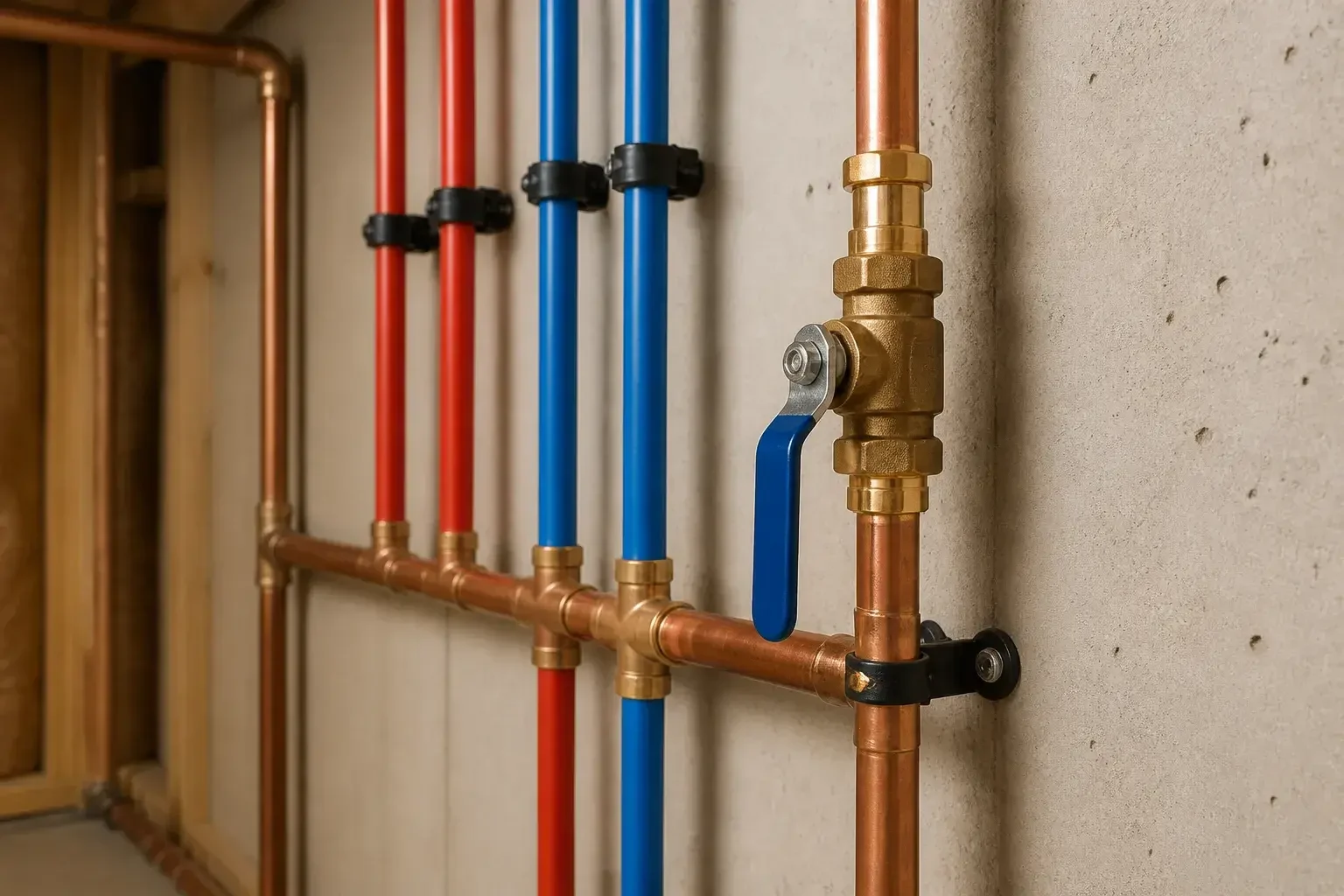
Repiping in Boise, ID
Old piping is replaced when frequent problems and aging materials start causing more trouble.
When pipes start failing in more than one place, patching each leak only buys a little time. You may notice discolored water, pressure that fades without warning, noises in the walls, or damp spots that keep coming back even after repairs. If those problems keep showing up, repiping can be the practical next step.
Ridgeline Plumbing helps homeowners in Boise replace aging or failing water lines with a clean, organized repiping process. Since 2009, we have worked across the Treasure Valley with straight pricing and clear communication, and we make it a point to answer the phone. If your plumbing is showing signs of broader wear, we can look at what is happening and help you decide whether partial repair or full repiping makes more sense.
Warning signs
Repiping is usually worth a closer look when plumbing problems stop acting like one-off issues. A single leak can happen to any home, but repeated trouble often points to pipe material that is wearing out, connections that are loosening, or lines that are no longer doing their job.
Common signs include:
- Frequent leaks: One repair after another can mean the pipe itself is reaching the end of its useful life.
- Low water pressure: Weak flow at sinks, tubs, or showers may happen when lines are narrowed by buildup or deterioration.
- Rust-colored water: Water that looks off when first turned on can suggest corrosion inside the pipes.
- Uneven pressure: A fixture that runs strong in one room and weak in another can point to system-wide issues.
- Water stains or damp drywall: Hidden leaks often show up first as cosmetic damage before anyone sees the pipe itself.
- Noisy piping: Rattling, banging, or creaking can happen when older lines are stressed or poorly supported.
If two or more of these problems are happening at once, it is smart to treat the issue as more than a simple repair.
Common causes
Repiping is not about replacing a single bad section. It is about addressing plumbing that has started to fail as a whole. Homes can run into these problems for different reasons, but the result is often the same: repeat service calls, more damage risk, and frustration for the homeowner.
- Aging pipe material: Over time, pipes can corrode, weaken, or become brittle enough that repairs are only temporary.
- Repaired spots throughout the home: Multiple old patches can create weak points and make future leaks more likely.
- Restricted flow inside the lines: Build-up and internal wear can reduce the amount of water reaching fixtures.
- Problematic connections: Joints and fittings can loosen or fail, especially when pipes have been stressed for years.
- Hidden damage behind walls or under floors: Leaks that are not obvious can keep spreading until the plumbing system needs more than spot fixes.
Repiping is often the cleaner option when the plumbing has moved beyond isolated trouble spots and into repeated system-wide failure.
How we approach it
At Ridgeline Plumbing, the goal is to replace only what needs replacing while keeping the work organized and clear. We know repiping affects daily routines, so the process should feel planned, not chaotic.
Start with the symptoms
We begin by listening to what you have noticed. That includes where the problems show up, how often they happen, and whether the issue is isolated to one fixture or spread through the home.
Review the piping layout
Once we understand the symptoms, we look at how the plumbing is arranged and where the failure points seem to be. That helps determine whether a targeted replacement or broader repiping is the better fit.
Replace with care
Repiping involves careful removal of failing sections and installation of new lines in a way that keeps the work as contained and clean as possible. We work to limit disruption and leave the space tidy when the job is done.
Check performance
After the new piping is in place, we confirm that fixtures are getting the flow they should and that the updated lines are functioning as intended.
This approach keeps the project grounded in the actual problem, rather than guessing at short-term fixes.
What repiping solves
Homeowners often start thinking about repiping because they are tired of the same issues coming back. The real value is not just replacing pipe. It is reducing the cycle of small failures that keep interrupting the house.
Repiping can help with:
- Recurring leaks: Replacing failing lines can stop the pattern of repeated patchwork repairs.
- Uneven water delivery: New lines can restore stronger, more consistent flow to fixtures.
- Water quality concerns: If old pipes are affecting the look or taste of water, replacement can remove that source of trouble.
- Wall and floor damage: Addressing aging pipes can reduce the chance of hidden leaks causing costly cosmetic damage.
- Constant repair calls: A full replacement can be more practical than continuing to chase the next weak spot.
If your plumbing has become a list of temporary fixes, repiping can be the step that brings the system back under control.
What to expect
Repiping is a bigger job than a standard leak repair, so it helps to know how the process typically unfolds. That way, there are fewer surprises and you can plan around the work with more confidence.
- Initial conversation: You tell us what you are seeing, and we talk through the symptoms and the areas affected.
- System review: We assess the piping issues and determine whether the problem is isolated or spread throughout the home.
- Work planning: Once the scope is clear, we map out the repiping approach so the project stays organized.
- Pipe replacement: Failing lines are removed and replaced with new piping in the affected areas.
- Final check: We confirm the plumbing is operating correctly and that the new lines are doing their job.
The exact details depend on the layout of the home and the condition of the existing pipes, but the goal stays the same: replace failing lines cleanly and with as little disruption as possible.
Why homeowners wait
A lot of people put off repiping because the plumbing still works part of the time. That makes the problem easy to ignore until the signs become hard to dismiss. The trouble is that partial function can hide ongoing damage.
Common reasons homeowners delay include:
- The leaks are small: Small leaks still add up when they keep returning.
- Repairs seem easier: A quick fix feels simpler until the next issue shows up.
- The problem is hidden: If the damage is behind walls or under floors, it can be easy to underestimate it.
- The water still runs: Flow alone does not mean the piping is in good shape.
The sooner you address failing pipes, the less likely you are to keep repeating the same repairs.
Local help in Boise
Repiping is not the kind of job most homeowners want to guess through. It takes clear communication, a clean process, and a plumber who can explain what is failing and why replacement may be the smarter move.
Ridgeline Plumbing serves Boise and the surrounding Treasure Valley with repiping, leak repair, water heaters, drain cleaning, and sewer line work. If your pipes are showing the same problems over and over, we can help you figure out whether the answer is a focused repair or a more complete replacement. We answer the phone, we keep pricing straightforward, and we respect the home while the work is underway.
Common questions
How do I know if repiping is worth considering?
If you are dealing with repeated leaks, low pressure, or discolored water in more than one part of the home, repiping may be worth a serious look. One isolated issue is different from a pattern.
Can repiping fix weak water pressure?
It can when the pressure problem is caused by worn, narrowed, or failing pipes. If the low flow is tied to the pipe condition, replacement may help restore better performance.
Is repiping only needed when pipes burst?
No. Many homeowners choose repiping before that point because repeated small leaks and visible deterioration are often signs the plumbing is wearing out.
Will repiping help with recurring leaks?
Yes, if the leaks are coming from aging lines or widespread deterioration. In that case, replacement can solve the underlying problem instead of patching the same areas again.
What parts of the home are usually involved?
That depends on where the failures are located and how the plumbing is laid out. Some homes need a targeted replacement, while others need broader work through multiple areas.
Should I call before the problem gets worse?
Yes. If the same plumbing issue keeps returning, it is better to address it sooner rather than wait for more damage to show up. Early action can make the work more manageable.
How We Work
A Clear Plumbing Process
Every job starts with a conversation about what is going wrong and what you want fixed.
Take a Look
We assess the issue and identify the likely cause before suggesting next steps.
Explain the Options
You get a clear explanation of the work and what it addresses.
Complete the Repair
We finish the job carefully and leave the area clean.
FAQ
Common Plumbing Questions
If you have a question about your plumbing, reach out and we will help you think it through.
How do I know if I need drain cleaning?
Slow drains, recurring clogs, and gurgling fixtures are common signs. A look at the line can help confirm the cause.
When should a water heater be replaced?
If hot water is inconsistent, the unit is aging, or repairs keep adding up, replacement may make more sense.
What are signs of a hidden leak?
Unexpected water bills, damp spots, and stains can all point to a leak. It is best to address it early.
Is repiping needed for older homes?
If pipes are failing often or corrosion is becoming a pattern, repiping may be the better long-term fix.
What should I do if I think there is a sewer line issue?
Backups, multiple slow drains, and sewage smells can be warning signs. A sewer line inspection can help identify the problem.
Get started
Talk With a Local Plumber
Tell us what is going on, and we will help you figure out the right next step for repair, replacement, or cleanup.